
Difference Between Staffing and Human Resource Management
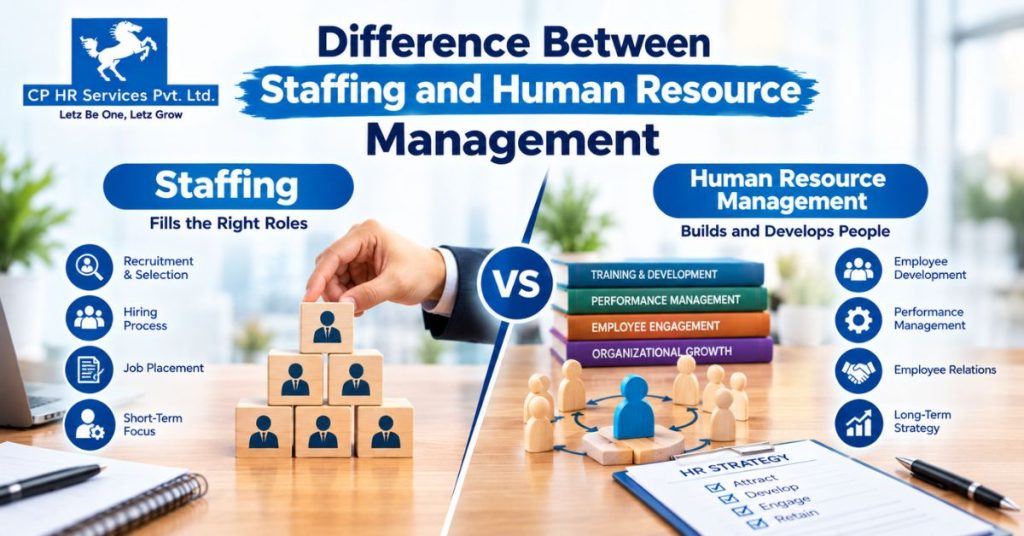
People use “staffing” and “human resource management” as if they are synonymous. They don’t. One on top of the other, you wrap a job. When they get mixed up, you end up with muddled job roles, thin HR plans, and wrong exam answers. This guide simplifies staffing versus human resource management: you will see what each of the terms covers, where they overlap, and how to make use of both in a real business. The Short Answer: Difference Between Staffing and Human Resource Management Staffing is about filling roles with the right people and keeping those roles filled. Human resource management (HRM) is the larger task of managing all that affects people at work. That includes hiring, but also pay, policies, discipline, welfare, and more. Lesson 2 National Institute of Open Schooling 2.1 HRM is a wider concept, and staffing is one part of it. Here is the difference in 3 lines: What Is Staffing? Staffing is one of the functions of management. In a Class XII handout on the aees.gov.in website, it is described as “filling and keeping filled the positions in an organisation structure”. As the NIOS lesson states, it is “the managerial function of using and developing human resources”. Notice the two pieces. You fill the seats, and you keep filling the seats. “If you hire well and lose people in six months, you’ve only done half the job. The Staffing Process The handout lists the following steps: identifying workforce requirements, recruitment, selection, placement, advancement, appraisal, and development. Here’s the breakdown: Who Handles Staffing All managers do some staffing. Managers want capable people on their teams. Much of the process is delegated to an HR team or an outside partner for larger companies. CP HR Services, a Pune-based HR firm in business since 2006, lists recruitment, background verification, and hiring assessments as separate hiring solutions on its website. These three services correspond to the recruit and select stages described above. What Is Human Resource Management? HRM manages people throughout their entire period with a company. The IEEE Technology Navigator states that HR encompasses the entire employee lifecycle—from attracting and hiring talent to developing employees, managing compensation/benefits, labour relations, and separation from employment. This list shows why HRM is the wider term. Staffing is in the early half of the life cycle. HRM addresses all of this. What HRM Covers Why HRM Decisions Shape Staffing Results Other choices affect the effectiveness of staffing. For one thing, career paths influence how long people stay. TD Magazine’s ATD article notes that employees at organisations with high internal mobility are staying for approximately 5.5 years, compared to slightly under three years at organisations with low mobility. No matter how good a company’s hiring is, a company with weak career paths is going to fill the same seats over and over again. Staffing vs Human Resource Management: Side-by-Side Comparison Factor Staffing Human resource management Scope Narrow: filling and keeping roles filled Wide: the whole employee lifecycle Main goal Right people in the right jobs Capable, motivated, well-managed workforce Typical activities Planning headcount, recruiting, selecting, placing, training Everything in staffing, plus pay, policy, relations, welfare Time horizon Tied to vacancies and role changes Continuous, every day of employment Who owns it? Line managers, often with HR support HR department with line manager input Where it lives One function within management A broad discipline of its own Sample question Do we have enough trained machine operators? Is our pay fair, and are our policies clear? Sign of failure Empty seats or poor fits High turnover, unrest, weak morale How Staffing Fits Inside HRM Think of HRM like an umbrella. One of the biggest ribs holding it up is staffing, but it is not the whole umbrella. Work that belongs mainly to staffing: Work that belongs to HRM beyond staffing: Some activities belong to both camps. Many Indian textbooks place training, appraisal, and pay design under staffing and others under HRM. That should not trouble you. The edges are fuzzy, but the big picture is there. Staffing is about getting and developing the right people. HRM is about managing the entire relationship. A Quick Scenario Take a manufacturing company that has 60 people. The plant superintendent needs three new machine operators for a second shift. She counts the jobs, puts them up, interviews six possibilities, chooses three, and arranges their first week’s training. That’s personnel. Meanwhile, the HR manager is setting overtime rules for the new shift, changing pay bands, updating the leave policy, handling a scheduling complaint, and investigating why two supervisors quit last quarter. That’s HRM. Both jobs are important and feed into each other. This is a sample case, not a real-world company. Common Mistakes to Avoid Here’s how teams get stuck: Which Does Your Business Need First? Most businesses need both from the start, but small teams can start light. Go through these steps: For smaller companies without an HR team, steps two through four will require ready-made documents. CP HR Services lists HR consulting on a monthly retainer and on-demand HR support, including formats, handbooks, and SOPs, as part of its HR consulting services. Next Steps Remember the simple rule: staffing is a part, and HRM is the whole. Fill your seats by getting your staffing right. And then construct the wider HRM layer of pay, policy, and employee care so people want to stay in them. Related reading: The CP HR Services blog explores topics such as how to help new hires get settled in on the first day. FAQs on Staffing vs Human Resource Management What is the main difference between staffing and human resource management? Staffing includes planning, recruiting, selecting, training, and appraising to fill and keep positions. HRM is wider. This includes staffing and pay, policies, employee relations, welfare, and legal records. Staffing is one facet of HRM, not a stand-alone or equal area. Is staffing a part of human resource management? Yes. Indian business studies materials, including a National Institute of Open Schooling lesson,
Internal and External Sources of Recruitment: Know the Difference
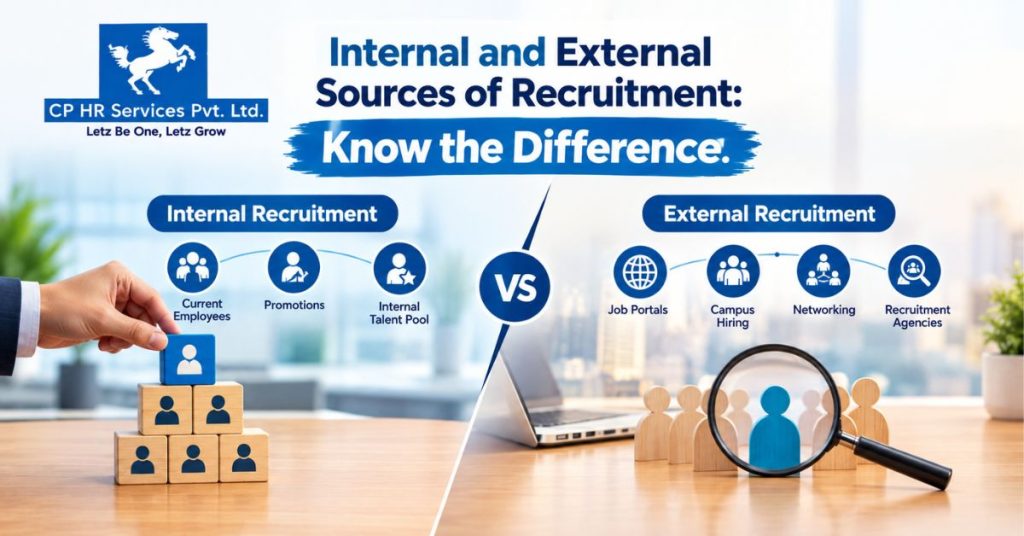
You have an open slot and a quick turnaround. Do you look inside your own team? Or do you just post the job and see who shows up? This choice is central to internal versus external sources of recruitment. Both paths work, and both have trade-offs in cost, speed, and risk. Let’s break it down so you can pick the right path for your next vacancy. The Short Answer Internal sources fill a vacancy with people already working for your company. It is filled with candidates from outside the company by external sources. Internal hiring is typically cheaper and quicker. External hiring brings in new skills and a wider talent pool. Most growing companies use both, varying by role. What Are Sources of Recruitment in HR? A source of recruitment is any location or channel from which you find candidates for a job. HR teams then tag these sources into two buckets based on one question – is the candidate already working for you? That answer will inform your budget, timeline, and even how your current team feels about the opening. So it pays to know both groups before you write the job post. Internal Sources of Recruitment Internal sources of recruitment are the talent you already have on board. They know you, and you know them. They know your products, your managers, and your habits. That’s what it looks like in real hiring. Common Internal Hiring Methods Advantages of Internal Hiring The retention point is supported by research. According to an ATD article in TD Magazine, employees at organisations with high internal mobility stay about 5.5 years, versus slightly under three years at organisations with low internal mobility. According to SHRM, LinkedIn data shows that employees who move around within a company are also more likely to stick around. Disadvantages of Internal Hiring External Sources of Recruitment External sources of recruitment are those that reach out to people outside your company. This group reaches more channels than the internal group and is still growing as hiring goes online. Common External Hiring Channels Advantages of External Hiring Disadvantages of External Hiring Internal vs External Sources of Recruitment: Side-by-Side Comparison Factor Internal sources External sources Candidate pool Current employees only Anyone in the job market Cost Usually lower Usually higher Speed Faster Slower Ramp-up time Short Longer Fresh ideas Fewer More Risk of a bad hire Lower, since you know the person Higher, since you know less Effect on morale Boosts it Can bruise it if staff feel ignored Best for Next-step and leadership roles New skills, fast growth, entry-level volume What the Research Says About Internal and External Hires Here’s why this decision should be revisited. Matthew Bidwell, a Wharton professor, looked at the question in an investment banking context. He found that outside hires received much lower performance ratings in the first two years than employees who were promoted or transferred into similar roles and said it takes about two years for outsiders to catch up. New hires from outside also earned much more than staff members promoted from within for similar jobs. That’s a straightforward tradeoff. You pay more for an outsider and wait longer for the complete results. Cost works the same way. According to LinkedIn’s talent development team, hiring a new employee costs about 2.5 times more than reskilling an existing one. Be careful. That’s one industry the Wharton study looked at, so consider it a cautionary tale, not a rule. The figures are also based on large company data sets, and your own figures may differ. Leverage the research to ask better questions, then look at your own hiring data. A Quick Scenario Take the example of a midsize manufacturer looking for a new production supervisor. A senior machine operator has 3 years with the firm and knows every line and has trained 2 juniors. Bringing that person in from within costs next to nothing, and the trust of the team is already there. Then the company needs a new operator, a position that is easier to fill from outside. Now reverse the roles. The same manufacturer wants a quality systems lead to bring in a certification that no one on the staff has ever worked with. There is no internal candidate. This time around, the smart move is to go outside. This is a simple illustration of the pattern. But the role determines the source. How to Choose Between Internal and External Hiring This is what you need to do for each new opening: When Internal Hiring Wins When External Hiring Wins Vet Every Hire, Whatever the Source “Because there are more unknowns with outside candidates, checking is even more important.” CP HR Services, a Pune-based HR company that has been in business since 2006, lists recruitment, background verification, and hiring assessments as separate hiring solutions on its website. This division makes sense. Hiring a candidate and confirming a candidate are two different jobs. Care must be taken with internal moves too. A long-time employee who moves to a finance or security position still needs a reasonable assessment of the requirements of the new role. Tips to Make Either Route Work Next Steps No path wins all the time. Internal hiring saves your budget and retains good people. External hiring brings in skills you don’t have. Pair the source to the role, track what each costs you, and look over the numbers after each hire. To learn more, visit the CP HR Services blog for topics such as helping new employees get settled on their first day. FAQs on Internal vs External Sources of Recruitment What is the main difference between internal and external sources of recruitment? Internal sources fill a vacancy by using your current employees through transfers, promotions, and internal postings. It is filled from outside the company through external sources like job portals, agencies, campus drives, and social media. Internal hiring is usually cheaper. External hiring gives you more choice. Are employee referrals an internal or external source of recruitment?
How to Make New Hires Comfortable on Their First Day of Work

First impressions are hard to forget. Research on new hire experience from BambooHR finds that 62% of employees say their impressions of the first day are still accurate months later. But how someone feels walking out of the office on day one is probably how they will describe your company for a long time. That first day means more to most managers than they realise. According to research by Digitate, SHRM data indicates that up to 20% of employee turnover occurs in the first 45 days of a job, and a negative onboarding experience is twice as likely to drive employees to seek opportunities elsewhere. It’s not just good manners to make new hires feel comfortable on their first day at work. It’s one of the least expensive things a business can do to protect its hiring investment. Why the First Day Matters So Much The significance of the first day New workers come in with a mix of excitement and fear. They still don’t know where the bathroom is, who to turn to for help, or whether their new boss is approachable. Every little signal, whether it’s a warm welcome, clear instructions, or someone checking in on them, reduces that uncertainty or increases it. According to Brandon Hall Group, a strong onboarding process can increase employee retention by 82%. That’s a number you can’t ignore. A good first day – well-organised, comfortable – sets the tone for everything that comes next: how quickly somebody becomes productive and whether they stay past their first year. How to Make New Hires Comfortable: A Step-by-Step Approach 1. Start Before Day One The comfort starts even before the new hire walks in. Send them a welcome email a few days before, covering the practicalities – arrival time, what to bring, dress code, and who will be there to greet them. Give a quick overview of the team and what the first day will be like so that nothing is a shock. A simple gesture, like a welcome kit or note from their new manager, can go a long way to ease those first-day jitters before they even step foot in the office. 2. Prepare Their Workspace in Advance Few things shake a new hire’s confidence more than arriving at an empty desk, no laptop, or a login that is not yet working. Have their workstation, equipment, e-mail account, and any needed system access ready before they arrive. This one step eliminates one of the most common and most preventable first-day frustrations. 3. Assign a Warm, Personal Welcome When the new hire walks in, they should be immediately greeted, ideally by their manager or a designated buddy, not just by the front desk. Five minutes of personal welcome does more to calm nerves than any presentation slide deck. 4. Introduce Them to the Team Early If you make the new hire meet colleagues at the end of the day, they will be on their own during the hours when they most need to feel connected. Take them for a walk, introduce names and roles, and provide an opportunity for a quick hello to everyone. Even a brief team lunch or coffee break on day one can go a long way toward helping a new hire feel like they’re part of the group and not an outsider looking in from the sidelines. 5. Assign a Buddy or Mentor A new hire can be assigned a peer buddy, someone who is not in their direct reporting line, to provide a pressure-free person to ask questions they may feel uncomfortable asking their manager. This one relationship often makes the difference between a new hire who feels supported and one who feels lost. 6. Set Clear, Realistic Expectations Vague instructions are anxiety-provoking. Explain the general picture of what their first day, first week, and first month will look like. A simple 30-60-90 day outline gives them a sense of direction instead of them having to guess what success looks like. 7. Avoid Overloading Them with Information It’s tempting to try to stuff every policy, tool, and process into day one. Resist that impulse. Instead, spread orientation content out over the first week or two and focus on what the new hire really needs to be able to do on day one: where to sit, who to call, and what their first assignment will be. 8. Check In Throughout the Day A quick check-in at lunch and close to the end of the day is a way to see that a new hire is someone someone is paying attention to and how they are settling in. It doesn’t need to be formal. Sometimes, a simple “How’s it going so far? Anything you need?” is enough to catch small confusions before they become bigger frustrations. 9. Give Them an Early, Achievable Task On day one, assign a small, clear task to a new hire, something simple, so they have an early feeling of contribution rather than sitting through a full day of passive orientation. Even doing one little thing successfully builds confidence fast. 10. Follow Up at the End of the Day Before they leave, take a few minutes to ask how the day went and to answer any remaining questions. This last moment often sets the tone for how a new hire is feeling as they head home on their commute and how they feel about coming back the next day in turn. Common Mistakes That Undermine a New Hire’s Comfort A few patterns repeat themselves in bad first-day experiences: Onboard Day 1 as a one-day event. A good first day is important, but it needs to be reinforced over the first few weeks, not just the opening hours that count. Why This Effort Pays Off Some of this may look like a small, obvious courtesy. It is, and it works for that reason alone. New hires aren’t looking for a big gesture. They want the simple signals that they made the right choice: a prepared workspace, a
10 Non-Monetary Incentives to Boost Employee Satisfaction in 2027
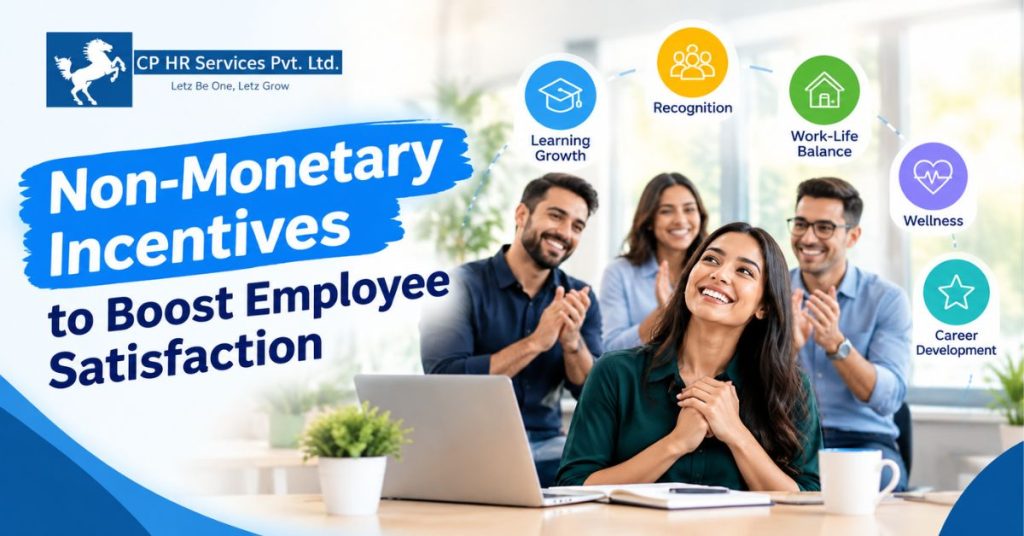
According to Gallup’s State of the Global Workplace 2026 report, global employee engagement fell to its lowest point since 2020 at 20% in 2025. South Asia experienced the steepest regional decline of any region, falling five percentage points in one year. Gallup estimates that this disengagement costs about $10 trillion in lost productivity globally. Pay rises alone will not fix this problem. Money matters, but it’s not the lever most companies can pull enough, and it’s rarely the reason people are quietly quitting at work. Non-monetary incentives—the things that make people feel recognised, trusted, and invested in—will tend to move engagement faster than another round of raises ever could. Here are 10 non-monetary incentives that you should consider adding to your 2027 people strategy (and why they work). What Are Non-Monetary Incentives? Non-monetary incentives are recognition and reward efforts that, while not directly adding to an employee’s pay cheque, still motivate and engage them. This includes things like public recognition, flexible schedules, learning opportunities, and meaningful autonomy in how work gets done. They work differently than raises or bonuses. The lure of monetary rewards usually creates a brief surge of motivation that soon dissipates. Non-monetary incentives, when done well, create a more resilient sense of being valued that lasts longer and costs a lot less to maintain. 1. Public Recognition and Appreciation A simple, specific acknowledgement, in a team meeting, company newsletter, or a direct message from leadership, costs almost nothing and has an outsized impact on morale. The keyword is precision. “Great work this quarter” doesn’t ring quite the same as identifying the specific project, decision, or effort that mattered. More formal recognition programmes where peers can nominate each other for specific contributions tend to be more effective than programmes that rely only on recognition handed down from managers. 2. Flexible Work Arrangements Flexible hours, hybrid schedules, or the ability to work remotely on some days consistently top the lists of most requested non-monetary benefits in recent workplace surveys. This is not just a pandemic-era preference that has faded away. “It is a true reflection of how employees want to organise their time between work and personal responsibilities. Flexibility doesn’t always mean working remotely 100% of the time. Small measures of control—such as selecting start times, shortening a workweek, or working from home one day a week—significantly enhance how supported employees perceive themselves to be. 3. Career Development and Upskilling Opportunities When a company offers training, certifications, or stretch projects, it signals to employees that they are a long-term investment, not a replaceable resource. This is even more crucial when skill demands shift quickly across industries, as employees who feel stuck often start looking elsewhere before they even think to ask for a raise. Development doesn’t have to be high budget. Internal mentorship, project rotations across teams, and coaching from managers are all meaningful development, even if there is no formal training budget attached. 4. Meaningful Autonomy Over Work Micromanagement kills engagement faster than almost anything else. By giving employees real ownership over how they approach a task, not just what the result should be, you develop a sense of trust and competence that no perk can replicate. This is especially true for veteran employees who check out the quickest when they don’t feel their judgement is trusted despite a history of good work. 5. Stronger, More Present Management Gallup research indicates that management, rather than pay or technology, is the key factor in the recent drop in engagement. Manager engagement fell off a cliff from 2024 to 2025, and in organisations that Gallup defines as best practice, manager engagement is nearly four times higher than the global average. In effect, investing in manager training, regular one-on-ones, and clear feedback loops is a non-monetary incentive in itself. People don’t leave good managers, even if the rest of the job is not perfect. 6. Mentorship Programmes Mentoring employees with someone inside the organisation, particularly for those starting or who have just been promoted, builds connection and a stronger sense of career direction. Mentorship is also good for the mentor, as it often increases their own engagement by providing a visible role in someone else’s growth. Formal programmes work, but informal mentorship, encouraged and supported by leadership rather than forced, often feels more real to both parties. 7. Mental Health and Wellness Support Counselling, wellness days, or a real culture of not overworking has gone from a nice-to-have to almost a baseline expectation. This is even more important, given how closely burnout correlates with disengagement. Gallup’s data indicates that engaged employees are significantly less likely to experience burnout than disengaged employees, suggesting that wellness support and engagement efforts are complementary rather than competing for the same budget. 8. Additional Time Off and Flexible Leave Extra personal days, a flexible leave policy, or the chance to take a short sabbatical after a period of intense work all show that a company values rest as part of sustainable performance, not simply a break from productivity. What counts is not the leave that is written down, but the leave that employees feel safe to take. 9. Purpose-Driven Work and Community Involvement Employees are increasingly looking for their work to connect to something larger than quarterly goals. That sense of purpose can be elevated at no direct cost through volunteering opportunities, company-supported community projects, or just more transparent communication about how someone’s role directly contributes to the bigger picture. This incentive works best when it is voluntary and genuine, not when it becomes a mandatory activity that seems like more work in disguise as a benefit. 10. Personalised and Experiential Rewards Generic company-branded merchandise rarely moves the needle the way a personalised reward does – an extra day off timed around something that matters to the employee, a curated learning subscription, or recognition tailored to what that specific person values. Personalisation requires more effort than a one-size-fits-all reward, but it lands with much more impact. Why Non-Monetary Incentives Matter More in 2027 Several forces
15 Monetary & Non-Monetary Benefits for Employees

Ask any HR leader what prevents good people from walking out the door, and salary alone rarely ranks at the top of the list anymore. The employees of today look at the whole package – what they’re paid, how they’re treated, and if the job fits their lives. India’s overall attrition rate stood at 17.1% in 2025, with e-commerce and IT running even higher at 28.7% and 25%, according to Aon’s Annual Salary Increase and Turnover Survey. Replacing that many people takes time, money, and institutional knowledge that’s hard to rebuild. One of the most direct ways to reduce that churn is to offer a strong mix of monetary and non-monetary benefits for employees. This guide walks you through 15 benefits to consider, split out into what appears on a paycheque and what doesn’t, and why each is important. What Are Monetary and Non-Monetary Benefits? Monetary benefits are cash or cash-equivalent financial rewards that are added to an employee’s total compensation package. This includes salary components, bonuses, and statutory contributions such as provident funds, etc. Non-monetary benefits are perks and programmes that enhance an employee’s work experience without adding dollars to their pay cheque. This includes things like flexible hours, learning opportunities, and a positive work culture. Each type is a failure in itself. People do not stay because of a good salary in a toxic work culture. Nor will there be a fun office with pay that lags behind the market. The best retention strategies do both. Monetary Benefits for Employees 1. Competitive Base Salary This is the foundation on which everything else is built. The first thing employees will do when comparing benefits is look at salary, and if your salary is far below market value, it will negate the value of everything else you offer. 2. Performance Bonuses and Incentives Individual, team, and company performance bonuses provide employees with a direct financial incentive to go the extra mile. They work best when the standards are clear and well communicated well in advance, rather than being decided after the fact. 3. Provident Fund (EPF) Contributions Employer’s contribution to the Employees’ Provident Fund is a mandatory long-term savings benefit in India. A well-managed EPF process not only ensures compliance, but it also shows that the company is serious about its statutory obligations, which in turn builds employee trust. 4. Gratuity Gratuity is a one-time payment to employees who have served for a minimum period of continuous service, usually as a recognition for long-term commitment. The labour reforms in recent times have also opened up the eligibility for pro rata gratuity to fixed-term employees and permanent staff. 5. House Rent Allowance and Other Allowances Housing, conveyance and meals allowances help employees deal with the real costs of working life and have some tax efficiency depending on how they are structured. These are especially desirable in high-cost-of-living cities. 6. Group Health Insurance Coverage Employer-paid or subsidised health insurance that includes hospitalisation and, more and more, outpatient care and mental health visits is no longer a differentiator but close to a baseline expectation. The plans that tend to shine the most are those that cover spouses, children, and parents. 7. Employee Stock Options (ESOPs) and Profit Sharing ESOPs provide employees with a direct stake in the long-term success of the company, which can be a powerful retention tool, especially for startups and growth-stage companies. Profit-sharing plans also link a portion of an employee’s compensation to the company’s performance. 8. Referral Bonuses Incentives for Successful Referrals: Paying a bonus to employees who successfully refer a new hire rewards them for helping to build the team and often reduces recruitment costs and time-to-hire compared to open-market sourcing. Non-Monetary Benefits for Employees 9. Flexible Work Arrangements Hybrid schedules, flexible start times, or the ability to work remotely put the power in the hands of employees to structure their day. This flexibility is almost always cited as a top benefit in recent workplace surveys, regardless of your age or seniority. 10. Paid Time Off and Leave Policies Generous, well-communicated leave policies, including annual leave, sick leave, and parental leave, protect employees from burning out and demonstrate a company’s value of rest as much as its value of output. Leave that is theoretically available but in practice discouraged has no real benefit. 11. Learning and Development Opportunities Training programmes, certifications, and skill-building support help employees grow in their role rather than feeling stuck. Employers who visibly invest in employee development also tend to attract candidates who are looking for a career, not just a job. 12. Career Growth and Promotion Pathways A clear, transparent path for advancement gives employees a reason to stay and grow internally rather than seeking the next step somewhere else. Some common, preventable reasons people leave: promotion criteria are vague or inconsistent. 13. Recognition and Appreciation Programmes Structured recognition, whether it’s a formal award, a public shout-out, or just a manager’s acknowledgement, meets a basic need most employees share, which is knowing their work is noticed. Little to implement but has an outsized effect on morale. 14. Mental Health and Wellness Support Access to counselling, wellness programmes, or an employee assistance programme has gone from a nice-to-have to an expected part of a modern benefits package. Recent workplace surveys show that nearly six in ten employees report work-related stress, making this support more relevant than ever. 15. A Positive Workplace Culture This is the most difficult benefit to describe and the most obvious to recognise when it is missing. Whatever else is on offer, though, respectful management, fair treatment and a culture where people feel comfortable raising concerns all add to whether or not someone wants to stay long-term. Monetary vs. Non-Monetary: Which Matters More? There isn’t one right answer, because it is contingent upon the workforce and where every employee is in their life. For early-career employees, salary and learning opportunities are often paramount as they build savings and skills. Mid-career employees with families tend to value health benefits, flexibility, and
What Is Employment Status and Why It Is Important.
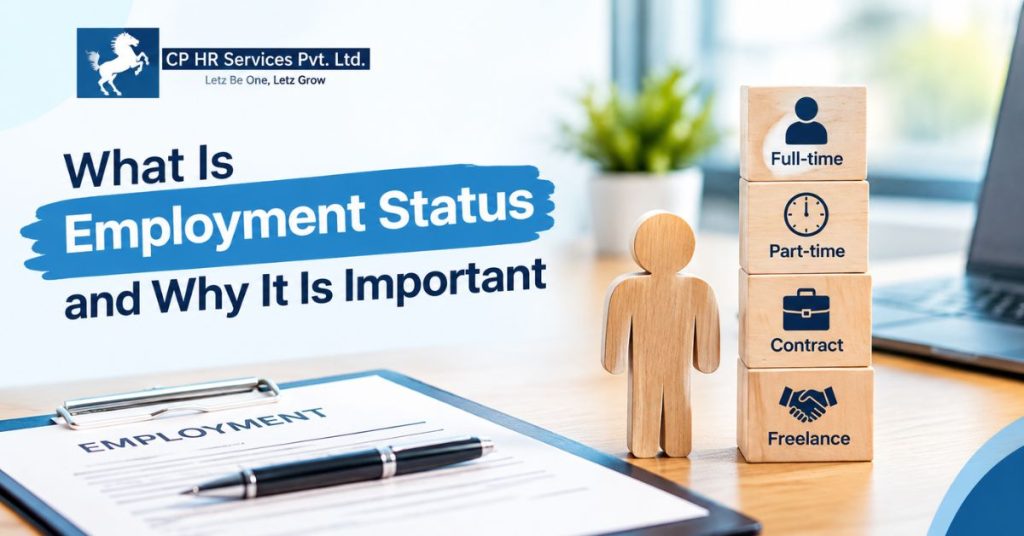
Two people can work for the same company, sitting at desks next to each other, and have totally different rights, benefits, and tax treatment. The biggest difference is one thing: employment status. Employment status is far more important than it seems on the surface. It determines whether a person receives provident fund contributions, paid leave, gratuity, or job security. For employers, an error can mean compliance penalties, back-pay claims, or disputes that can drag on for months. This guide gives you an understanding of what employment status means in India, the major classifications you’ll come across, and why it deserves more attention than most companies give it. What Does Employment Status Mean? Employment status refers to the legal status of a person’s relationship with work, based on the way they are engaged, paid, and managed. It determines which labour laws apply to them, what benefits they are entitled to, and how their income is taxed. Indian labour law does not rely on job titles alone to make that determination. Courts and regulators look at the actual nature of the relationship, including who controls the work, whether the person uses company equipment, how they are paid, and whether they work for only one employer. If the actual working relationship resembles that of an employee, the person classified as a “consultant” on paper may still be treated as an employee in practice. Main Types of Employment Status in India 1. Permanent Employees This is the usual ongoing employment relationship without a specified end date. Permanent employees generally enjoy the full range of statutory benefits, including provident fund contributions, gratuity after a qualifying period, paid leave, and protection against arbitrary termination. The vast majority of full-time office and factory jobs are of this type. 2. Fixed-Term Employees Fixed-term employment has a specified start and end date, often linked to a specific project or seasonal requirement. In India’s Labour Codes, this category was formally recognised, with a requirement that fixed-term employees receive the same wages and benefits as permanent employees doing similar work and a pro-rata gratuity entitlement even if the contract is for less than five years. 3. Probationary Employees Probationers are new employees in the first period of assessment, usually three to six months, but often longer for senior positions. Employers assess fit and performance during this period before offering the person a permanent role. Notice periods and termination rules in probation are generally less stringent than for confirmed employees. 4. Temporary and Casual Workers These are short-term or seasonal roles, often used to help manage peak demand or cover for absent staff. Casual workers are typically not as protected as regular employees, and they are paid for days or hours worked, not on a monthly salary basis. 5. Contract Labour Contract labour is the term used to describe employees that are supplied by a third-party contractor to work on a company’s premises, rather than being hired directly. This is a common arrangement in manufacturing, facilities management and logistics, and carries with it legal obligations for both the contractor and the company hiring the labour. 6. Consultants and Independent Contractors Consultants are generally hired to do professional work that is not part of the normal duties of the employee. They usually work on their own terms, invoice for their services, and do not enjoy the benefits of an employee. The main risk here is misclassification – if a “consultant” is actually working full-time, under the supervision of the company, with no independence, they could legally be an employee regardless of what the contract says. 7. Interns and Apprentices Interns and apprentices are generally early in their careers and looking for hands-on experience. They are often there for a set period of time, and sometimes they are given a formal stipend instead of a full salary. India has specific rules to govern apprenticeships, including a minimum stipend structure and training obligations. 8. Gig and Platform Workers India has seen a rapid growth in gig work, including delivery, ride-hailing and freelance digital work organised through platforms. Some states, like Rajasthan, Karnataka and Jharkhand, have enacted specific laws to extend registration and welfare benefits to this segment. They suggest a shift toward a recognition of gig work as a separate category of employment and not as a subset of casual labour. Why Employment Status Matters For Employees For Employers Employment Status and India’s Labour Codes India has been merging decades of individual labour laws into four labour codes: the Code on Wages, the Industrial Relations Code, the Code on Social Security and the Occupational Safety, Health and Working Conditions Code. They also formally define categories such as fixed-term employees and provide some protections for gig and platform workers, which older laws did not clearly cover. For employers, this means employment status classifications are becoming more consistent across states, although the implementation timelines and specific rules are still different. As the details are still evolving as states finalise their own rules under the central framework, it’s worth checking with an HR or legal advisor to keep up to date on how these codes apply to your workforce. How to Determine the Right Employment Status When you’re an employer creating a new role, before you decide how to classify it, ask yourself these questions: If you get the classification right at the time of hire, it saves a lot of trouble down the road as far as compliance and setting clear expectations with the person you’re bringing on board. How CP HR Services Can Help It is not always straightforward to correctly classify roles and build compliant employment relationships – this is particularly the case for companies that are scaling quickly or hiring across multiple categories simultaneously. CP HR Services has recruitment and HR consulting teams that work directly with businesses to get the hiring right from the get-go, whether it’s permanent, fixed-term for projects, or contract labour. We also offer monthly retainer and on-demand HR consulting for companies that require ongoing guidance on employment classification,
What Is a Reference Check and Why It Is Important?

A resume tells you who a candidate is. A reference check tells you what others say about them. Both are important, but only one provides an outside perspective before you make a hiring decision that might shape your team for years to come. This guide explains what a reference check really is, the reference check and why it is important for hiring in India today, and how to do one properly without wasting your time or the candidate’s. What Is a Reference Check? A reference check is a step in the hiring process when an employer contacts people who have worked with a candidate in the past, typically former managers, supervisors, or colleagues, to verify information about their work history and performance. Generally, this occurs after a successful interview and before the final offer is issued. A typical reference check will include: Some companies stop at checking basic facts. Others go further and ask specific, structured questions to build a more detailed picture of how someone actually performs on the job. Both are reference checks, but the second provides much more useful information. Reference Check vs. Background Verification These two terms are used interchangeably, but they are not the same. A reference check evaluates performance and character based on conversations with people who worked closely with the candidate. A background verification is something different, and it is based on facts and records, confirming educational qualifications, employment history, identity documents, addresses, and at times, even criminal records through official sources and databases. Essentially, a reference check tells you how someone operates. A background check verifies the truth of the information on their resume. Both are used in a strong hiring system. Why Reference Checks Matter More Than Ever The numbers bear that out. Resume exaggeration is pretty common. According to a background verification report titled ‘Workforce Fraud Files’ by AuthBridge on India’s workforce, the year 2025 witnessed 6% of white-collar hires being found to have discrepancies, with some of the highest rates seen in sectors such as pharma, BFSI, telecom, and IT or ITES. In pharma alone, the mismatches were around 16%, and in BFSI, it came close to 11.7%. These numbers only include factual mismatches found by formal verification. They don’t pick up softer issues, such as a candidate overstating his or her role, taking credit for work by a team, or leaving out why he or she actually left their last job. That’s exactly where a reference check can fill the gap. Here’s why you should add a reference check to your hiring process. 1. It Confirms What the Resume Cannot Interviews are a one-way performance. Candidates rehearse answers, practise stories, and put their best foot forward. This is fair and expected. A reference check is a second source: someone who saw the candidate work on a day-to-day basis, not talk about it in an interview. 2. It Reduces the Risk of a Bad Hire A bad hire costs more than just the pay cheque. This includes lost productivity, disruption to the team, training time, and the cost of having to start the search again. Reference checks catch red flags before an offer is extended, not after someone has joined and the damage is done. 3. It Reveals Work Style and Team Fit A former boss can tell you things that a resume will never reveal. How does this person perform under pressure? Are they directionally sound? Are they reliable with a tight deadline? These types of insights help you know whether someone will actually flourish on your team — not just whether they’re able to do the job on paper. 4. It Protects Your Company’s Reputation If you hire someone with a history of conduct problems and you’re unaware of it, it can lead to legal, safety, or reputational issues down the line. One of the easiest ways to catch this before it becomes your problem is a reference check. 5. It Builds Trust with Your Own Team When a new hire is all that was advertised – reliable, skilled, and easy to work with – it reflects well on the person who made the hiring decision. Consistent, thorough reference checks build a track record of good hires, which builds trust in your HR process over time. How to Conduct a Reference Check the Right Way Step 1: Ask for the Right References Request at least two references who have directly supervised or worked with the candidate in their most recent positions. A reference from five jobs ago doesn’t tell you much about how someone does now. Step 2: Prepare Specific Questions Don’t ask generic questions like “Was this person a good employee?” Instead, ask about particular situations: Step 3: Listen for What Is Not Said Hesitation, vague answers, or a reference to someone who ducks direct questions can tell you as much as a glowing recommendation. A former manager who says, “I can only confirm dates of employment,” because of company policy, is one thing, but one who simply will not answer a question about reliability is another. Step 4: Document Everything Write down notes on each reference request. It protects you in the event that a hiring decision is ever questioned later and keeps the process consistent from candidate to candidate. Step 5: Combine It with Formal Background Verification A phone reference check is a useful tool but should be used in conjunction with more formal verification of education, employment history, and identity documents. Together they paint a complete and defensible picture before you make an offer. Common Mistakes Employers Make with Reference Checks How CP HR Services Supports This Process As part of our core recruitment work, we at CP HR Services do background verification and hiring assessments; hence, we can see the impact that a proper reference check has on the quality of a hire. In addition to formal verification of facts, our team assists companies in developing structured reference and screening processes that are more than just a quick phone call and
10 Best AI Tools for Career Guidance and Growth

The job search and career planning process is not like it used to be five years ago. Resumes are screened by software before a human ever sees them. Now, instead of a friend going down a list of questions, you can do interview prep with an AI simulator. And figuring out what career path truly aligns with your skills is no longer a guessing game that you have to play alone. Job-searching, resume-building, and interview-prepping AI tools are now a standard way people look for jobs. In this guide, we’ll look at ten of the most useful, what they’re really good at, and where they fall short so you can build a toolkit that works for your particular situation rather than a collection of apps you’ll never open again. Why AI Tools for Career Growth Matter Now The rapid growth of this category can be attributed to a few shifts. 10 Best AI Tools for Career Guidance and Growth 1. LinkedIn LinkedIn is still the most powerful platform for personal branding, networking, and getting discovered by recruiters. AI-assisted features now help you write profile summaries, suggest skills to add, and surface job matches based on your activity (Cake, “The Ultimate Guide to AI Job Search Tools,” 2026, https://www.cake.me/resources/career-tool/ai-job-search-tools). It’s less effective as an independent resume builder and works best when combined with a dedicated resume tool. 2. ChatGPT ChatGPT is one of the most flexible tools in the arsenal of the job seeker. People use it to write resume bullet points, write cover letters, generate likely interview questions, and even conduct mock interview role play. It has a free tier, with paid plans beginning at approximately $20/month (Seekario, “Best AI Job Search Tools in 2026: A Complete Comparison,” https://seekario.ai/bpost/best-ai-job-search-tools-in-2026-a-complete-comparison). The downside is that it’s not a dedicated job search site. There’s no built-in ATS scoring or application tracking, so the quality of what you get is largely dependent on how well you prompt it. 3. Kickresume Kickresume is an AI-powered resume and cover letter maker, with templates that take you from a blank page to a finished document in no time. This is a good base resume for anyone looking to build a solid foundation before customising for an individual application. 4. Jobscan Jobscan is considered the standard for ATS optimisation. It compares your resume to a specific job description and gives you a match score as well as suggestions for keywords you may be missing (Cake, “The Ultimate Guide to AI Job Search Tools”, 2026, https://www.cake.me/resources/career-tool/ai-job-search-tools). This is one of the more helpful tools for someone who thinks their resume isn’t even getting to a human reviewer. 5. Teal Teal is a complete dashboard for the entire job search process, allowing users to track applications, save postings, and build resumes all in one place. If you’re applying to multiple jobs at once, this kind of structure matters more than any single AI feature. 6. Rezi Rezi is designed to be ATS-friendly and uses a 23-point evaluation system to score resumes based on keyword usage, formatting, and overall effectiveness (Denken Solutions, “Best AI Tools for Job Search & Applications 2026″, 2026, https://denkensolutions.com/blog/careers/ai-tools-for-job-seekers/). Its AI bullet writer feature helps to turn a plain job description into achievement-focused language, which tends to read better for both software and human reviewers. 7. Final Round AI Final Round AI is focused on interview prep and uses AI-powered mock interviews to help candidates practise their answers and how they deliver them before a real interview (Cake, “The Ultimate Guide to AI Job Search Tools,” 2026, https://www.cake.me/resources/career-tool/ai-job-search-tools). It’s a good option if you find interview anxiety harder to deal with than the resume stage. 8. Jobright Jobright is an AI-driven job matching platform that suggests openings based on your resume, experience, and stated goals. It also provides company research and niche filters, like visa-related filters for international candidates (Monster, “15 Best AI Job Search Tools to Help You Get Hired in 2026,” 2026, https://www.monster.com/career-advice/job-search/ai-job-search-tools). It’s best for those who want curated recommendations instead of scrolling through generic job boards. 9. Grammarly Grammarly is not a job search tool, per se, but it’s a supporting actor that’s more important than you think. A clean, error-free resume, cover letter, or LinkedIn message makes a huge difference in how a candidate comes across. Its AI suggestions spot things that are easy to miss when reviewing your own writing. 10. Coursera Coursera isn’t a job search engine in the traditional sense, but it’s an essential part of career growth. It provides AI-recommended learning paths and certifications for particular career goals, making it useful for anyone looking to close a skills gap before applying for jobs in a new field or at a higher level. How to Build an AI Tool Stack for Your Career Search You don’t have to run all ten tools simultaneously. Here’s a practical way to combine a few of them, depending on where you’re actually stuck. What AI Tools for Career Growth Can’t Do It’s fair to be up front about the limitations here. AI tools can help with repetitive tasks, but they can’t create a real professional relationship, tell your personal story in an interview, or tell you which job is right for you in terms of values, schedule, and long-term aspirations. Recruiters can often spot generic AI-written content quickly, so the human touch you add on top of these tools still matters more than the tools themselves (Apollo Technical, “Best AI Job Search Tools: What Actually Works in 2026,” 2026, https://www.apollotechnical.com/best-ai-job-search-tools-what-actually-works/). This is where structured career guidance still has a role that artificial intelligence cannot fully replace. Usually, understanding your strengths, weighing tradeoffs between different career paths, and getting honest feedback on how you’re actually coming across in an interview benefits from a real conversation with someone who’s done this work for years. Where CP HR Services Fits Into Career Planning CP HR Services, an HR consulting firm based in Pune, has been in operation since 2006. Apart from its recruitment and HR
What Is AI Corporate Training and Its Benefits?

A few years ago, “corporate training” was mostly a workshop, a slide deck, and a feedback form no one filled out honestly. That was a quick change of image. AI corporate training now ranges from intelligent learning platforms that customize content for each employee to programmes that train staff on how to use AI tools in their everyday work. Here’s why this is important now. The World Economic Forum’s Future of Jobs Report 2025 estimates that employers expect close to 39% of workers’ core skills to change by 2030. Technological skills, particularly in AI and big data, are predicted to increase in importance faster than any other skill category. That is not a far-off trend. It’s already impacting hiring, promotions, and training budgets today. What Is AI Corporate Training? This method has two connected things and separates them clearly. Why AI Corporate Training Has Become a Priority A few numbers explain why this topic moved from “nice to have” to “budget line item” so quickly. The plain fact is that employees are already using AI tools with or without formal training. The more organised approach is to get ahead of this with structured programmes, not the messier alternative, where staff figure it out on their own, inconsistently and sometimes incorrectly. Core Benefits of AI Corporate Training These are the benefits businesses are seeing after AI-supported training programmes are established. How AI Corporate Training Actually Works A typical programme usually goes through a few clear steps: This structure applies whether training is delivered virtually, in person or through a blended approach. What matters is that it’s built around real skill gaps, not some generic template. Common Concerns Businesses Have About AI Training It’s also worth being honest about the friction points, since no rollout is ever totally smooth. Nothing on this list should make you want to avoid AI corporate training. They are reasons to roll out carefully, not to buy a platform and hope it works itself out. Where a Corporate Training Partner Fits In Technology is only half the story. The other half, arguably the harder half, is the human side. Helping managers coach differently. Helping teams build confidence with new tools. Making sure training actually changes daily behaviour, instead of sitting in a completion report nobody looks at again. This is the point where an experienced corporate training provider like CP HR Services plays its role. CP HR Services, Pune (since 2006), develops custom-made corporate training programmes in soft skills, leadership development, and workforce capability that are delivered through role-plays, case studies, and real-life scenarios rather than generic slide decks. As more organisations combine the technical AI skills with the behavioural and communication skills employees need to actually apply them. CP HR Services partners with businesses to build out that human side of the transition: the coaching, change management, and team readiness that determine whether new tools and processes actually stick. If your business is developing a training plan that needs to encompass both new technology and the people skills to use it well, it is worth reviewing what CP HR Services offers directly on the CPHR Services website before deciding how to structure the rollout. How to Choose the Right Approach for Your Business Before diving into any platform or programme, there are a few questions worth answering first: Final Thoughts AI corporate training is not a one-off purchase. It’s a change in the way that companies build employee capability, with smarter tools to tailor learning and teach staff how to use AI responsibly in their real work. The organisations getting real value out of it are the ones treating it as a structured programme with clear goals, not a checkbox exercise. Whether you start with adaptive learning platforms, hands-on AI-skills workshops, or a mix of the two, the goal is the same: employees who are truly more capable, not just more “trained” on paper. Frequently Asked Questions 1. What is AI corporate training in simple terms? It covers two things: using AI tools to personalise and improve employee training and teaching employees how to use AI tools correctly in their day-to-day work. Most businesses need both. 2. Is AI corporate training only useful for tech companies? No. The World Economic Forum’s Future of Jobs Report 2025 revealed that the demand for AI-related skills is increasing in almost every sector, not just in technology. This is relevant for retail, manufacturing, healthcare and services too. 3. How is AI corporate training different from regular employee training? Regular training has a fixed schedule and content, the same for everybody. AI-supported training can adapt pace and content for each employee and identify skill gaps in real time rather than wait for a formal review. 4. Does AI corporate training replace human trainers? No. It changes what the trainers are looking for. The AI tools handle the repetitive content delivery and tracking, and the human trainers focus on coaching, communication, and helping teams actually apply what they learn. 5. How much does AI corporate training cost for a small or mid-sized business? It is contingent upon the scope. A targeted AI-skills workshop is far less expensive than a complete rollout of an adaptive learning platform. Most businesses start small, with one skill gap or one team, before scaling up.
What Is HR Transformation Consulting Services?

If you’ve spent any time reading about modern people management, you’ve probably heard the phrase “HR transformation”. That sounds big. That sounds expensive. And to many small and mid-sized business owners, it sounds like something only big corporations with full-time HR departments need to worry about. Not quite. At its heart, HR transformation is about making sure your people management practices match how your business actually works today – not how it worked five or ten years ago. And HR transformation consulting services are the outside expertise companies utilize to help them make that transition without the guesswork. Here is why this issue is more important now than before. Hybrid work, tighter budgets, new compliance rules, and rising employee expectations have all changed the face of “good HR”. According to Gartner, HR transformation is about changing how HR delivers services, manages talent, and uses technology so the function delivers real business value rather than just functioning in the background (Gartner, “Road Map to HR Transformation”). That’s a fancy way of saying: HR needs to stop being a paper pusher and start being an active partner in growing the business. So let’s walk through it, starting with what it actually means to a business like yours. What Does HR Transformation Actually Mean? HR transformation is not a one-off project with a start date and an end date. It’s an evolution of how a company thinks about hiring, policies, employee experience and compliance so that HR actually supports business goals instead of just keeping the lights on administratively. Successful transformations generally affect four areas: leadership, the HR operating model, HR team skills and HR technology (Gartner, “What Is HR Transformation and What Does It Achieve?”). In layman’s terms, this means: The good news is Gartner also says it doesn’t have to be a total overhaul. It could be an incremental shift that gradually aligns people, strategy, processes and technology with business goals, rather than a full rebuild done all at once (Gartner, “What Is HR Transformation and What Does It Achieve?”). That’s a relief for a growing SME. You don’t have to rebuild everything overnight. You need a plan and usually a partner who has done it before. Why Companies Turn to HR Transformation Consulting Services Most companies don’t wake up one day and say, “We want HR transformation.” Typically, they hit one particular problem first. Some common triggers: Any of these on its own is enough to call in outside HR expertise. Trying to do all of it internally, plus the day-to-day operations, usually means something gets dropped. Why do businesses hire HR consultants? Not because it sounds impressive, but because it’s faster and more reliable than working it out alone. That’s the practical reason. Core Components of an HR Transformation Engagement Every consulting assignment is a little different depending on the business, but most projects contain a common set of building blocks: Remember, none of this means that you need to have a full internal HR department on day one. This is precisely why consulting services exist, to give a business access to HR expertise on a flexible basis. How the HR Transformation Consulting Process Usually Works Whether the consultant is working with a 15-person startup or a 500-person company, a typical engagement proceeds in a fairly predictable way: Budget and urgency usually dictate what happens next. Some companies want a one-off project. Some people want ongoing support to deal with HR issues as they come up rather than letting them build up. Common Signs Your Business Needs HR Transformation Support You don’t need an audit to know something is wrong. Usually a few signs are enough: If two or more of these sound familiar, it may be time to consider bringing in some outside HR help before small gaps turn into bigger, more costly problems. How CP HR Services Supports Growing Businesses This is the kind of work a company like CP HR Services undertakes. CP HR Services, based in Pune, has been working since 2006 with start-ups, SMEs and larger organisations who want practical HR support and don’t want to build a large internal department. CP HR Services doesn’t believe in a one-size-fits-all package, so we offer monthly retainer HR consulting for businesses that want ongoing support with policies, hiring, attendance and compliance questions, and HR on-demand services for companies that need help with a specific, time-bound issue. The team also offers corporate training programmes and helps with recruitment and background verification, so businesses receive consistent support throughout the entire hiring and people-management lifecycle and not just parts of it. For a business that is somewhere between “we need real HR structure” and “we are not ready to hire a full HR team”, this flexible, retainer-based model is usually a practical, pragmatic starting point. CP HR Services offers a variety of services and industries which can be viewed directly on the CPHR Services website. Choosing the Right HR Transformation Consulting Partner Not every consultant is a good fit for every business. Here are some things to check before you sign with anyone: A good HR consulting partner should not seem like a vendor but an extension of your own team that understands your business well enough to give advice that fits, not cookie-cutter templates lifted from somewhere else. Final Thoughts HR consulting for business transformation addresses a real, common problem: businesses outpace their HR systems. You don’t need a big internal HR department to solve that. You’ll need clear policies, a repeatable hiring process, reliable compliance support, and someone experienced to help with the setup. It could be a monthly retainer, a short-term project, or a mix of both. Whatever the arrangement, the goal is the same: build HR that helps your business, not hinders it. Frequently Asked Questions 1. What is HR transformation consulting services in simple terms? It’s external expertise that changes the way a company does HR — policies, hiring, compliance, technology — so that people’s practices actually support business goals instead of just